San Martín
Ofrenda a la tormentaSan Martín is the forensic doctor whose examinations give Amaia Salazar’s investigations concrete medical evidence, but his work is never presented as detached technique alone. He can identify a concealed injury or the limits of a toxicology result with exactness; he is also shaken by the smallness of a dead child and, eventually, by the prospect of examining Jonan Etxaide. His arc brings professional duty into contact with the grief that forensic procedure cannot keep at a distance.
Identity and Investigative Work
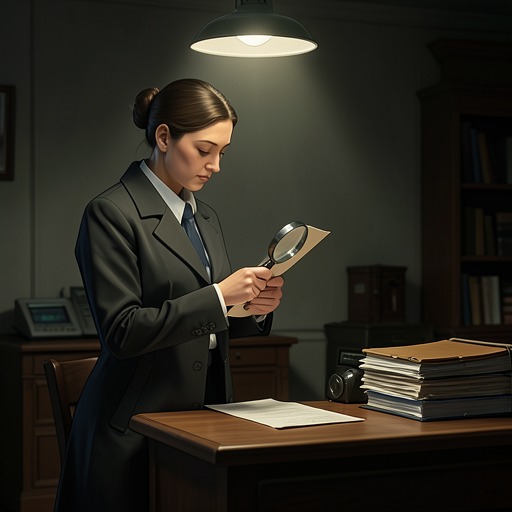
San Martín works as a forensic doctor and collaborates with Amaia and other investigators by examining bodies, interpreting physical traces, and clarifying what a medical finding can—and cannot—establish. In an early scene, an inspector opens a backpack containing a dead baby. San Martín joins the examination as a greasy cosmetic mark is removed from the bridge of the child’s nose. The lips retain a misleading hint of color, but the doctor redirects attention to the body itself: once lividity has settled, a pressure mark is plainly visible. He asks for the child to be examined fully, rather than allowing the apparent signs of life or the hurried concealment of the mark to shape the conclusion.
The scene establishes a characteristic combination of sympathy and discipline. San Martín registers the child’s smallness with sadness, then turns back to the work and identifies what the skin can show. His response does not soften the evidence or replace it with emotion; the emotional reaction is there alongside the examination, and he focuses on the task when he notices that others have seen it.
Findings and the Limits of Forensic Certainty
During another autopsy, San Martín is weighing internal organs when Amaia and Jonan arrive. The toxicology result indicates an excessive amount of a powerful tranquilizer, though he has not yet identified the active substance. The examined man was a psychiatrist and would have known which drug and quantity to use. While such drugs are usually injected, tiny abrasions along the sides of the tongue suggest that this one was taken orally. San Martín shows Amaia the small blister-like marks with forceps, turning a detail that might otherwise go unnoticed into a clue about how the drug entered the body.
His caution matters as much as the observation. In assessing an unpleasant fluid, he says that it resembles saliva and is plainly not human; its unusually high bacterial content would ordinarily suggest that the source was dead. He is careful not to claim zoological expertise, offering the saliva of a Komodo dragon only as the possibility that occurs to him. The finding is striking, but the scene preserves the distinction between an anomalous sample and a proven identification.
The investigation also depends on the medical boundaries around sudden infant death syndrome. The supplied account describes it as an unexpected death, usually before a child’s first birthday but sometimes as late as age two, occurring during sleep without apparent suffering. The diagnosis is made only when an autopsy finds no other cause. The account gives a European rate of two deaths per thousand births, with more than ninety percent occurring in the first six months, and notes that the condition is the leading cause of death among healthy babies after their first month. In Navarra, seventeen children had died this way over five years, four of them in Baztán, figures described as consistent with the wider average. These criteria explain both the usefulness and the uncertainty of the label: it names a death after other explanations have been excluded, rather than identifying a single cause.
San Martín also acts as a practical link between the inquiry and earlier forensic work. After he has spoken with Amaia about two infant cases, he gives her the telephone number of the doctor who performed those autopsies. That doctor remembers two apparently healthy girls whose examinations disclosed nothing to contradict the initial suggestion of sudden infant death. One child had slept face down; the other had not. The pathologist’s concern arose instead from the parents’ conduct, including one father’s insistence that his daughter’s organs remain inside her and his distinction between organ donation and a market in corpses. San Martín does not perform those earlier examinations, but his connection enables Amaia to pursue the medical and behavioral record without confusing suspicion with proof.
Aversity to Infant Autopsies
San Martín’s technical competence coexists with a longstanding reluctance to perform autopsies on babies and very young children. He avoids those cases when possible, referring them to colleagues who accept them readily. His hands seem enormous beside an infant’s tiny organs; he feels clumsy and brutal, and the minute expressions he sees on children’s faces remain in his mind for days. The narrative gives this reluctance specific physical and emotional terms, rather than presenting it as a general objection to forensic work.
For years, he has treated the avoidance as a manageable part of his practice. The death of an adult changes that understanding. In his inherited office—an imposing room furnished with heavy furniture and bronze pieces—he opens a sealed bottle of Macallan, drinks, and pours another glass as the tremor in his hands begins to subside. He has previously objected to carrying out an autopsy, but this is the first time an adult’s death has affected him in this way. Amaia’s grief has made him recognize that some professional acts carry a personal cost, and that the distinction between cases he can perform and cases he should not perform has become newly urgent.
Jonan Etxaide’s Death and San Martín’s Change
San Martín’s connection with Jonan is professional as well as personal. Jonan generally stays at the back during examinations, never approaches the table, and does not touch the bodies. San Martín sometimes jokes about this reserve, but he respects Jonan’s intelligence and sensitivity and understands that avoiding physical contact does not prevent him from being a capable analyst. The account makes their working relationship visible through this recognition: San Martín sees the investigator’s restraint not as a failure of nerve but as a different way of doing the work.
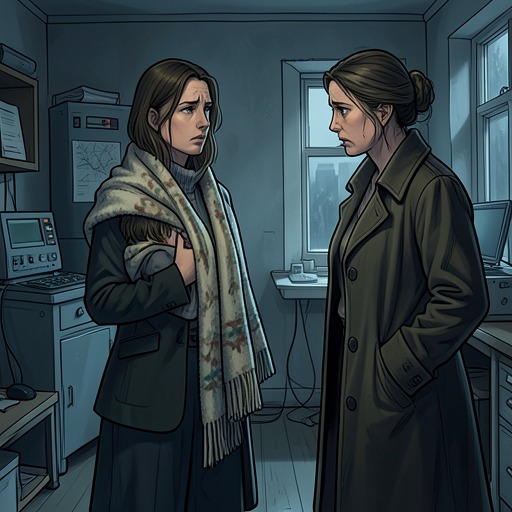
After Jonan dies, San Martín does not carry out the autopsy himself. He tells the assembled inspectors that personal reasons prevent him from doing so; the respected forensic pathologist Maite Hernández will perform it instead, with San Martín supervising the results. This decision follows his confrontation with grief and his newly acknowledged limits. It does not remove him from the investigation, but changes his role from examiner to supervisor at the moment when the body belongs to a colleague he valued.
Narrative Significance
San Martín’s character joins two kinds of evidence that the investigation must keep distinct: what the body establishes and what people’s conduct makes suspicious. His examinations disclose pressure marks, traces of ingestion, and an unusual nonhuman fluid, while his caution prevents suggestive findings from becoming certainty too soon. The broader infant-death inquiry similarly depends on distinguishing the formal diagnosis of sudden infant death from the unresolved questions surrounding particular families and cases.
His discomfort gives that distinction an ethical dimension. Forensic knowledge requires the body to be examined, yet San Martín knows that the act can feel brutal, especially when the dead are very young. With Jonan, the professional distance he has maintained gives way to a limit he cannot simply dismiss as weakness: he steps aside and accepts responsibility for supervising another doctor’s work. His importance lies not only in what he can read from a corpse, but also in recognizing when the person conducting the examination must be accounted for in the process.